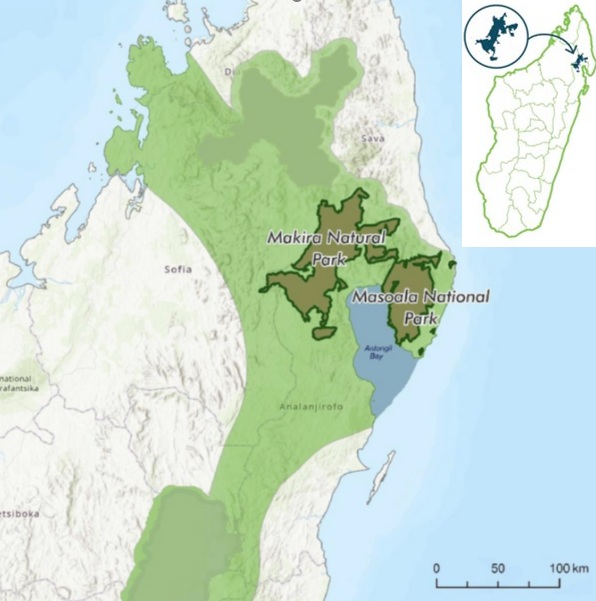
The MaMaBay landscape, in northeastern Madagascar, includes the Masoala National Park, the Makira Natural Park, and Antongil Bay. It contains some of the country’s most intact ecosystems—humid tropical forests, mangroves, coral reefs, and coastal marine areas—and represents one of Madagascar’s major strongholds of biodiversity. More than 300,000 people directly depend on the natural resources and ecological services of this landscape for their livelihoods.
Within this broader area, Makira holds a central position. Established in 2012, Makira Natural Park covers 372,470 hectares of low- and mid-altitude humid forest, making it the largest terrestrial protected area in Category II in Madagascar. The park is home to 17 species of lemurs, including four that are critically endangered, as well as exceptional biodiversity in birds, reptiles, amphibians, and plants.
Makira also plays a vital role for surrounding communities: approximately 90,000 people live nearby and depend on its ecosystem services. Around the park, more than 178,000 hectares of forest in the “Green Belt” are managed by local community associations (COBAs), highlighting the importance of conservation rooted in local territories.
Certified agroforestry cocoa: a driver of conservation
ECM is developing a certified cocoa value chain – organic and Fair Trade – in the forest areas of the MaMaBay landscape, in partnership with two cooperatives: KAJIVOLA and COPROCAVOL.
Cocoa is produced through agroforestry, without deforestation, and linked to conservation agreements that make access to premium markets conditional on compliance with clear environmental commitments.
Key cocoa figures:
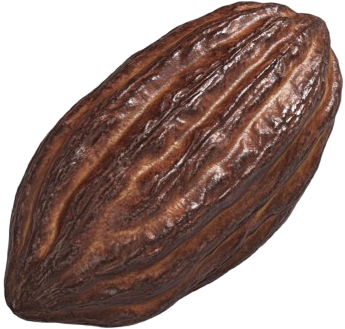
40 hectares of cocoa plots already certified
More than 200 producers engaged
Target: 150 hectares over the next 3 years
450 new producers to be supported within 3 years
ECM sells its production to committed buyers in premium markets. HALBA, a chocolate maker specialising in organic and Fair Trade cocoa, is a key partner of ECM, acting as both buyer and funder.
Through its projects, the MaMaBay Conservation Enterprise develops sustainable agricultural value chains in collaboration with rural communities to help finance the protection of the forests of the Makira-Masoala-Antongil Bay landscape.
Our projects are built on a simple model: market access, conservation agreements, and resilient agroforestry systems.
Bird's eye chili: income from the very first years
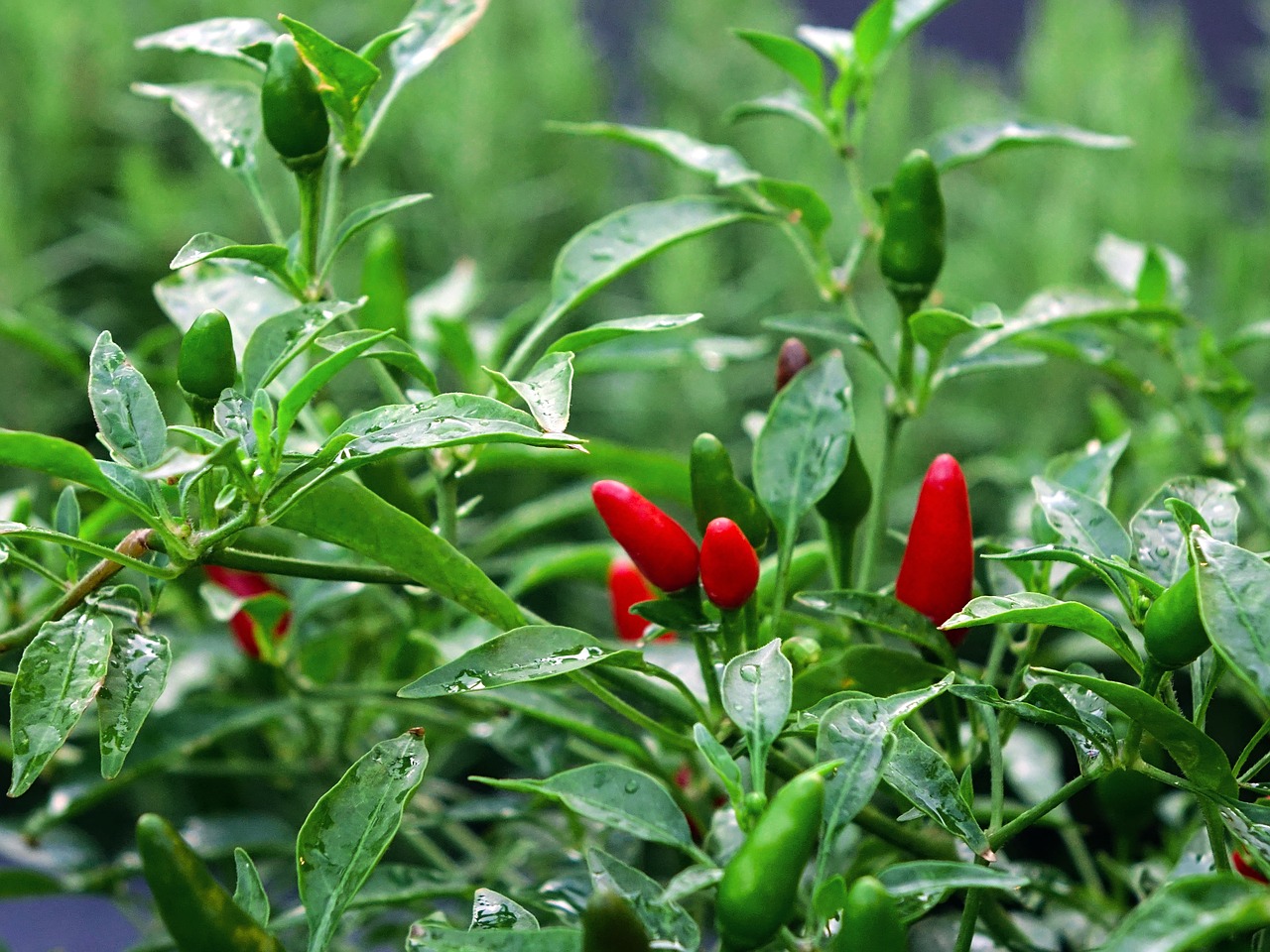
Alongside cocoa, ECM is developing a bird’s eye chili value chain in partnership with MC Ingrédients, a company active in the spice market.
Chili is planted directly within agroforestry plots, allowing producers to generate income from the first years, before cocoa reaches full production.
This complementary crop helps motivate producers from the moment plots are established, diversifies income sources, and strengthens household economic resilience.
A measurable impact for communities and forests
ECM’s projects are built on a structured model and market commitments tied to environmental compliance.
of products to be purchased from cooperatives through ECM over the next 3 years
of dynamic agroforestry plots by 2029
income tied to compliance with environmental commitments
The MaMaBay Conservation Enterprise helps secure local incomes and reduce pressure on forests.
Together,
these projects illustrate the ECM model: high-performing agricultural value chains integrated into a system of conservation agreements, where the market becomes a lasting driver of biodiversity protection.