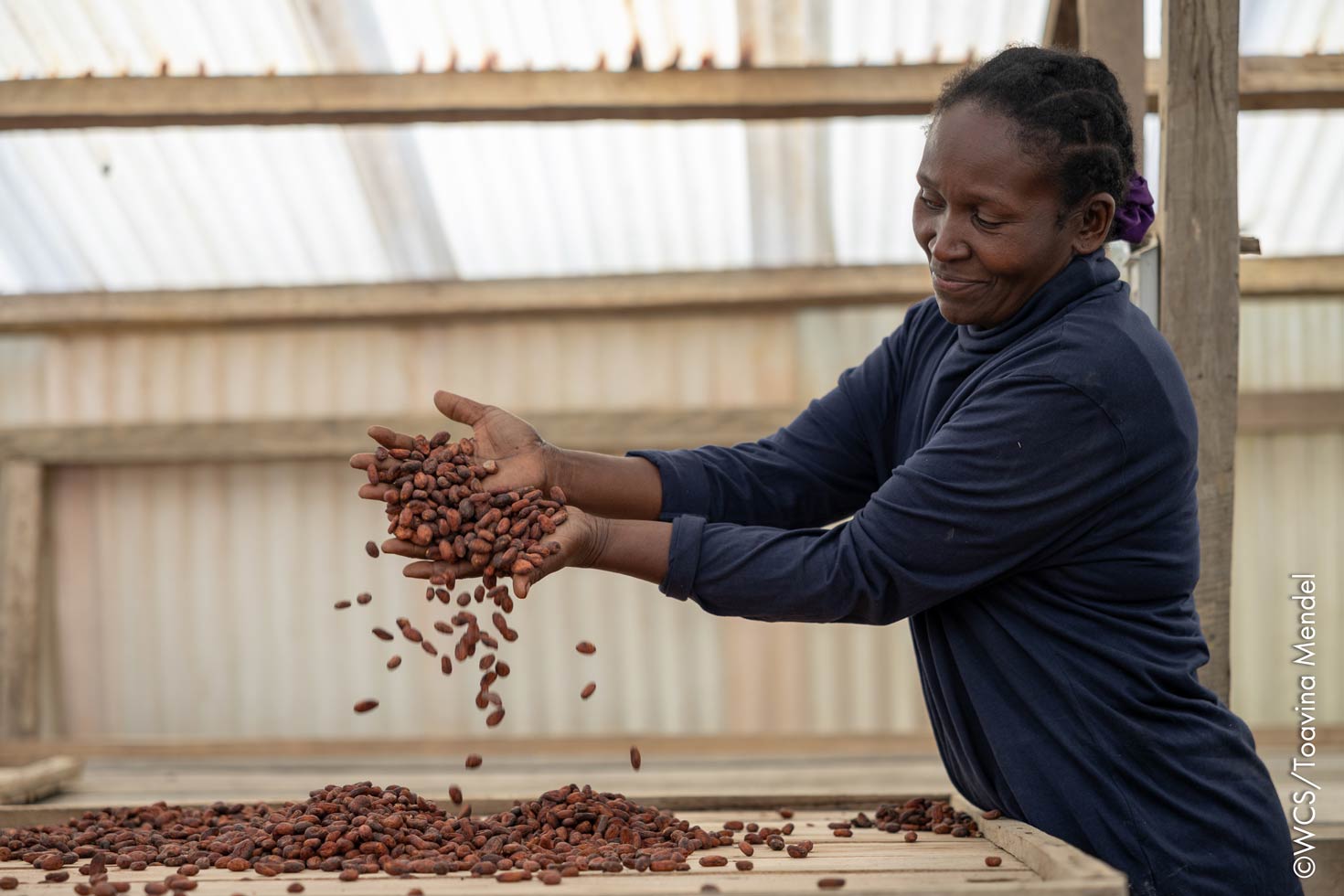
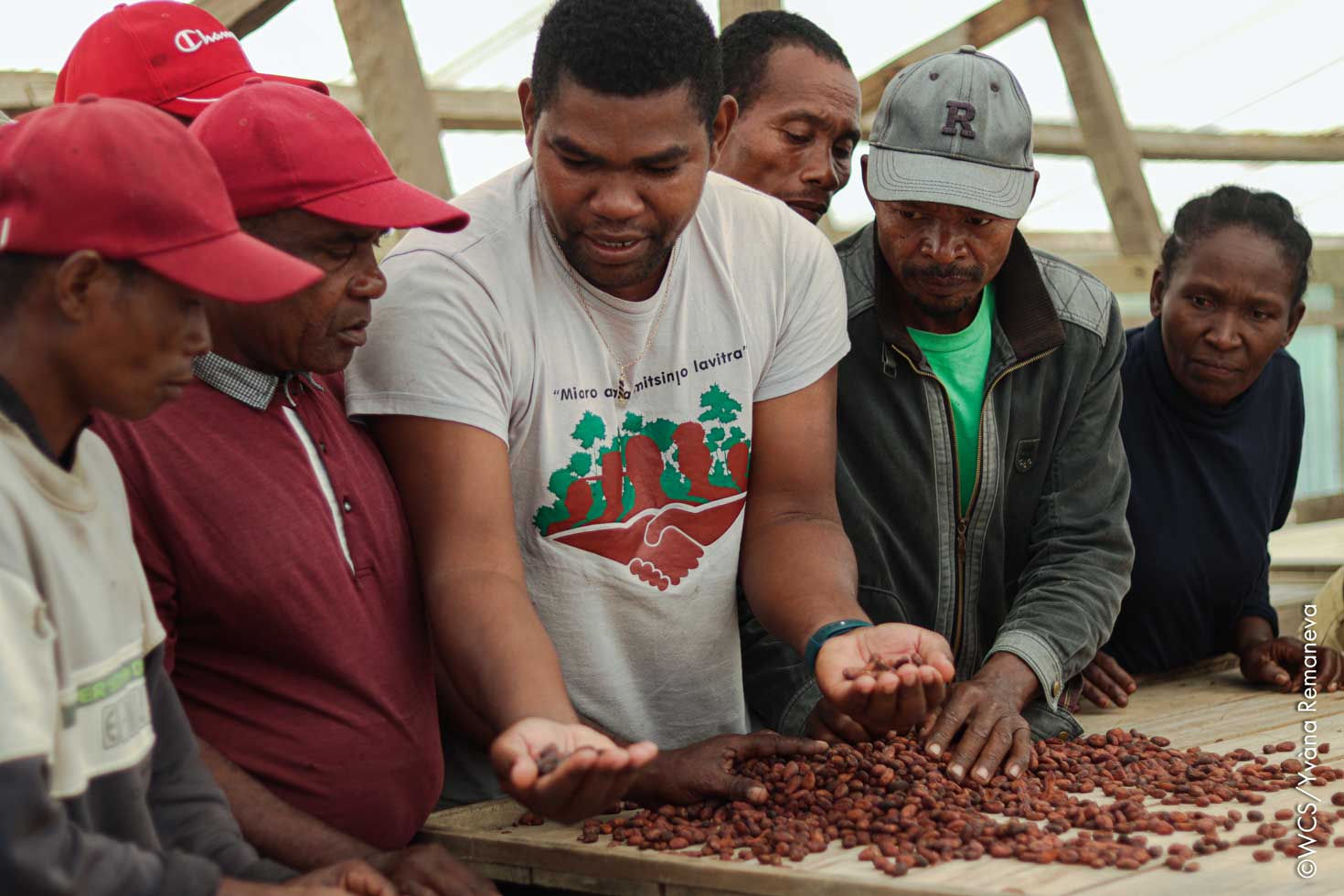
ECM is a limited liability company that directly connects cocoa producers in the buffer zones of the Makira-Masoala landscape to international markets. We structure certified and traceable supply chains where each ton of cocoa supports both sustainable income for communities and forest protection.
Our model is based on access to premium markets conditional on compliance with conservation agreements, committing producers and the Base Communities (COBA or Vondron’Olona Ifotony (VOI) in Malagasy) to protect their environment.
To guarantee producers access to premium markets, we supported the implementation of EU 2018/848 and NOP organic certifications for our partner cooperatives. This not only allows for better pricing of cocoa, but also of other products from our agroforestry plots.

Fair trade based on conservation agreements: sustainable trade relationships, fair prices and value sharing conditional on concrete commitments to forest protection.
Complete traceability, from the plot to the final product. Each batch of cocoa is tracked, monitored and linked to committed producers in order to meet the requirements of international markets and regulations for reducing deforestation.
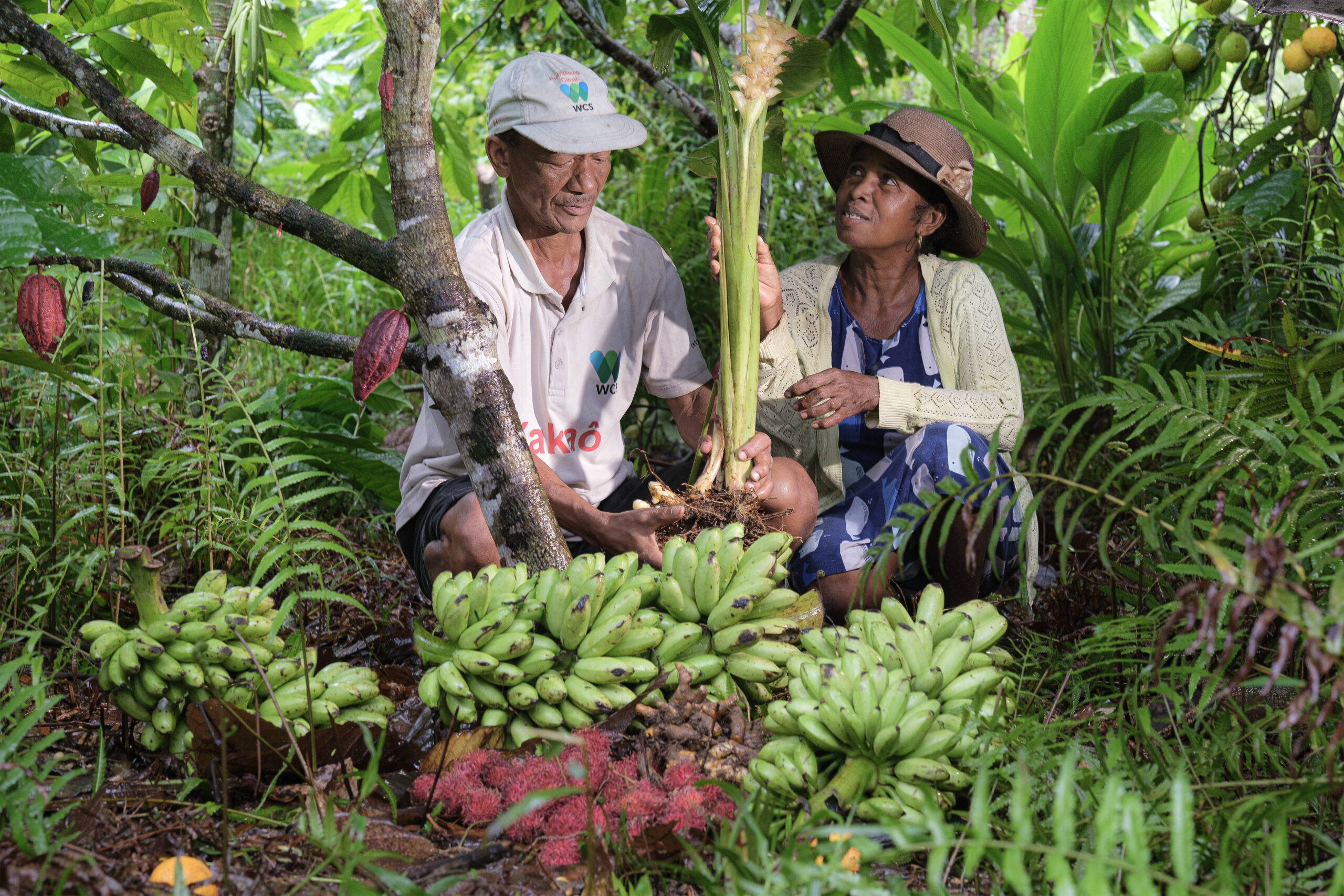
Dynamic agroforestry is a production system that combines agricultural crops, trees, and biodiversity on the same plot of land, drawing inspiration from the natural functioning of the forest. It regenerates soils, protects ecosystems, and ensures sustainable income for communities.
This model allows you to:
Restore soil fertility
Preserve forest cover and ecological corridors
Securing agricultural incomes and increasing resilience
A reciprocal commitment
Each conservation agreement is a voluntary and formalized commitment between three parties: the MaMaBay Conservation Enterprise (ECM), the producer, and COBA, a legally recognized community structure that ensures the local and collective management of natural resources. In exchange for verifiable commitments to the protection of forests and ecosystems, the producer benefits from technical support, secure access to profitable markets, and sustainable income.
Conservation thus becomes a condition of
market access and not an imposed constraint.